
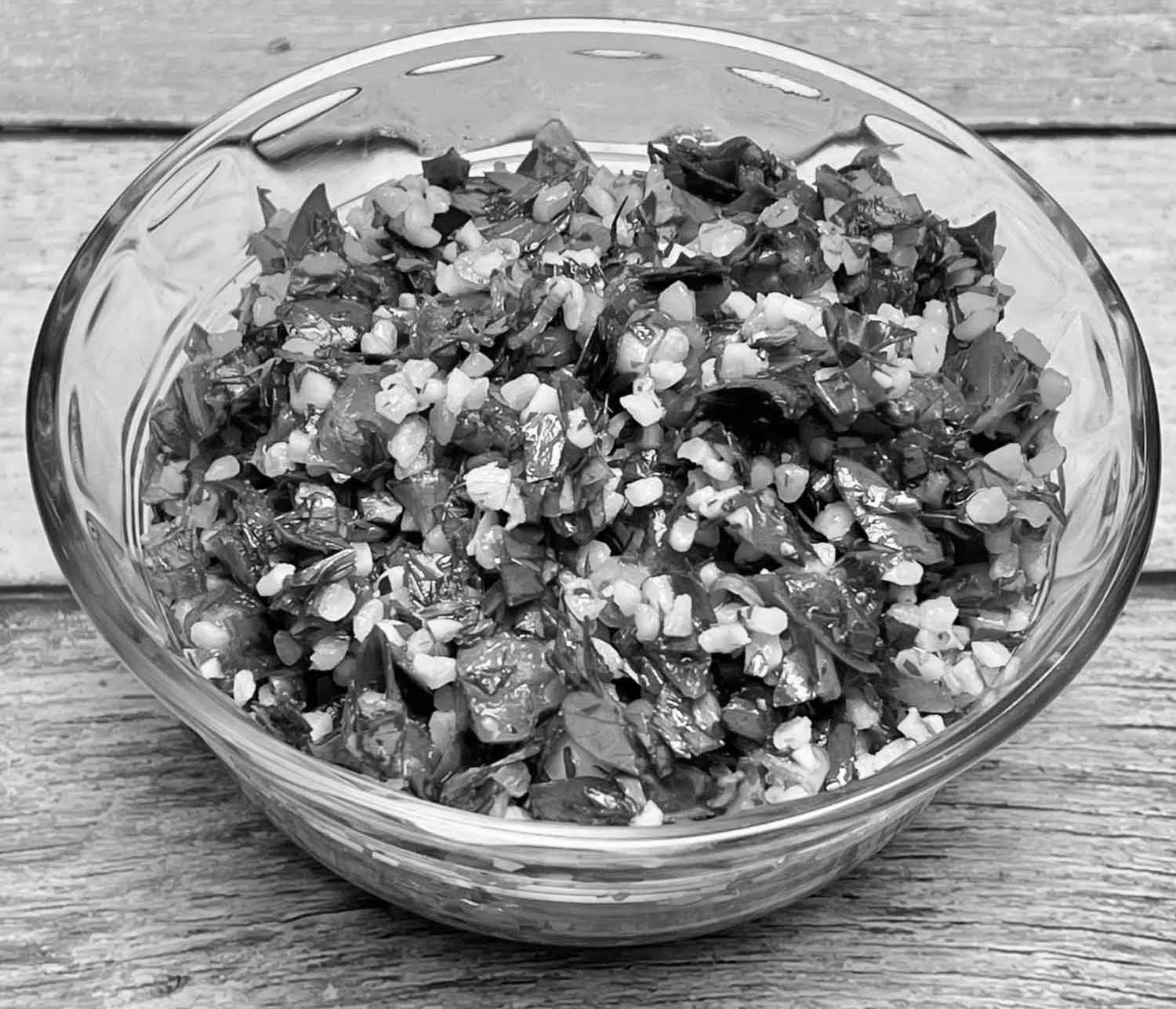
Some say it is a dish as old as the alphabet itself, having been developed sometime during the 12th century BC, around the time when Phoenicians were shaping the first written alphabet onto clay tablets.
Not surprisingly, there is no record of a definitive “Eureka!” moment as to who, where or when the very first serving of tabouleh was created, but it is generally accepted that it came from the hard working shepherds and farmers who lived in the mountains of what is known today as Syria and Lebanon.
Culinary experts reckon that women made the first form of tabouleh as a filler wrapped up in grape leaves and what was leftover after the last grape leaf was used was served on it's own, or maybe in a leaf of Romaine-type lettuce.
The basic ingredients of this Levantine salad have remained unchanged since it’s inception (save the tomato, which was unknown to the East until some 2,800 years later).
Traditional tabouleh as it has been prepared in Lebanon for centuries is a dish based on parsley and mint and not a bulgur wheatbased dish. Yes, there is bulgur in there, but not as the primary ingredient.
Tabouleh started with parsley… flat parsley to be more specific, the type that was found growing wild in the hills along the eastern shores of the Mediterranean Sea. The leafy herb was picked fresh, finely chopped and combined with mint leaves, which grew locally along stream banks and in damp shady areas.
Onion, the aromatic bulb that originated in central Asia and probably arrived in the Middle East via the silk road a thousand years before the first bowl of Tabouleh was served was chopped fine and added for a tangy kick.
Another key ingredient, cucumbers, were an obvious option for those early creators of tabouleh, as this prickly melon’s ancestry can be traced directly to the Middle East The grain in traditional tabouleh is known as bulgur, a parboiled, cracked wheat of the variety salamouni cultivated in the region around Hawran and in Mount Lebanon, Bekaa Valley and Baalbekit.
While these ingredients alone created a freakishly tasty and invigorating dish, very few Mediterranean foods were served without salt, olive oil, and/or the juice of the citron (an early derivative of the lemon) and the addition of these final ingredients brought a harmony of flavors to a dish that has out lived republics, empires, plagues, pestilence, floods and drought.
As the ancient Ottoman Empire spread and reached its zenith around 500 BC, it took tabouleh with it and the dish took on a life of its own as variations popped up in what is now Iraq, Iran, Armenia and Palestine.
To the west, the Greeks and even the Italians found love for tabouleh and altered the original recipe to meet their own needs and tastes.
For the Arabs, edible herbs known as qadb, were essential to their diet during the Middle Ages and tabouleh was served as a foundation dish to which qadb could be added.
Today, tabouleh is served as part of a mezze, or a selection of small dishes that make up a daily meal.