
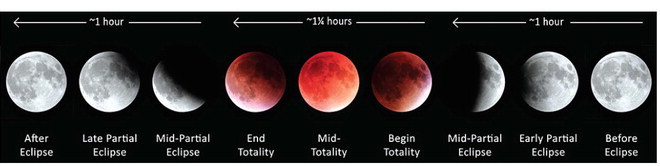
A natural celestial phenomenon, the lunar eclipse, in its dramatic transformation, turns a deep red during totality in the earth's shadow. According to Nasa this is North Americas one and only total lunar eclipse of 2025. If you are a sky watcher and want to catch this event, you will have to be a night owl or early morning riser, as it begins in the late hours of the 13 th of March approx. 11pm for Oklahomans. Totality is expected to happen approx. 2am in the early morning of March 14. Unlike its counterpart the solar eclipse, the lunar can be safely viewed by the naked eye.
A lunar eclipse is the outcome of the alignment of the earth with the sun and the moon casting a shadow by blocking the full light of the sun onto the moon, by proxy of earth.
There are two types of shadows that can be viewed during the process, the penumbra and umbra. The dark part of the shadow in the umbra is in its totality and the lighter shadow is known as the penumbra is when the sun, earth and moon begin the move into alignment and out of alignment. As earth’s shadow dims the moons glow, constellations, open clusters, and planets such as Jupiter and Mars, and even some meteor showers will be easier to view, weather permitting.
The great thinker Aristotle noted that the shadows on the moon during the lunar eclipse were round in his cosmological treatise, De Caelo (“On the Heavens”) in 350 BC concluding that the earth is spherical, because only a sphere can cast a circular shadow and was round no matter where the eclipse took place.