
“Greater Tuna” talent extravaganza
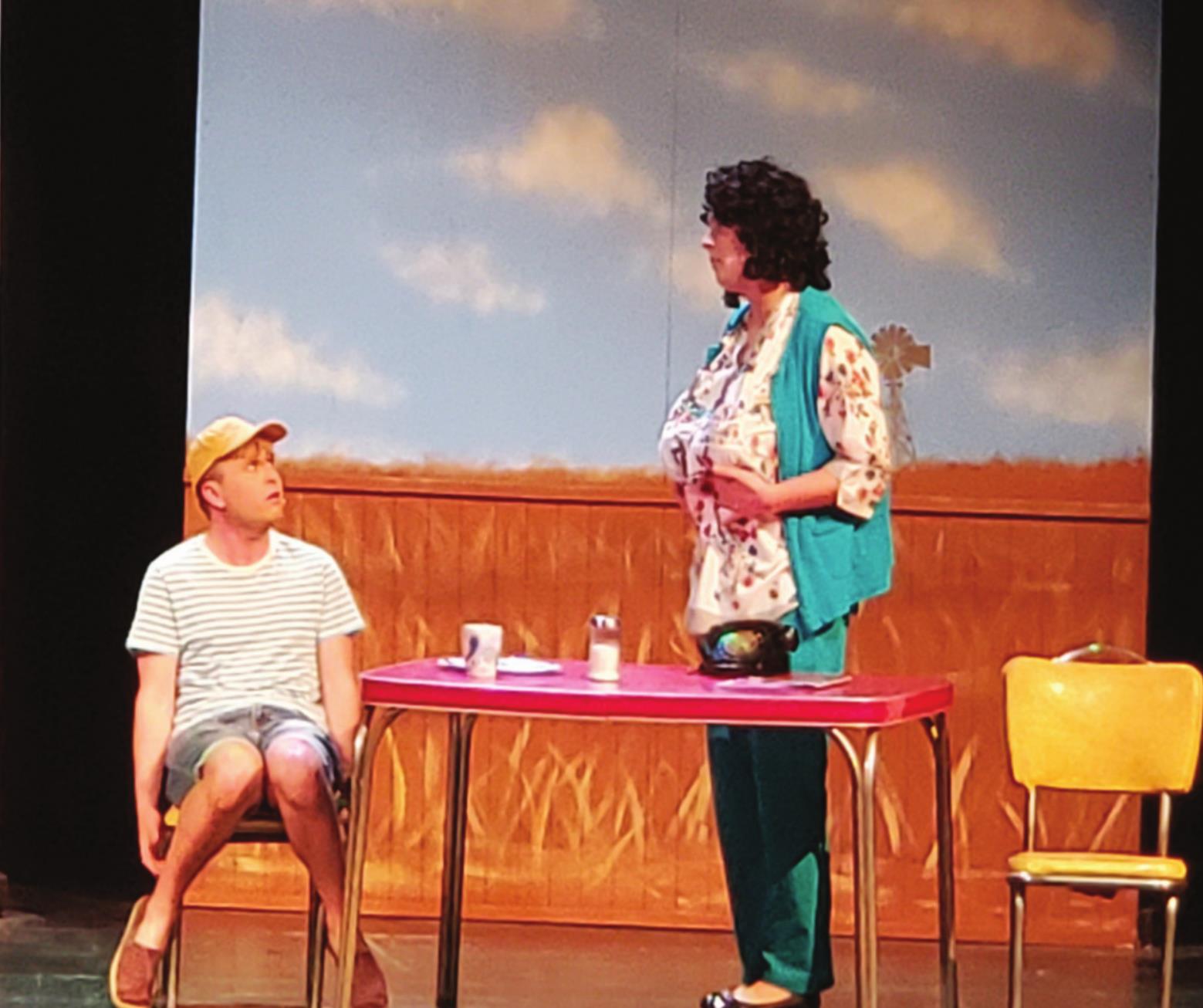
Onstage at the Freeland presented “Greater Tuna” last weekend. Tickets were very reasonably priced at only $15 each. However, seating was strictly limited for social-distancing purposes, and masks were strongly recommended to prevent the spread of COVID during the play. Producer and retired doctor Chip Cooper recommended the restrictions but still worked diligently to bring the fun, comical production to the Freeland in an effort to lighten difficult times and utilize laughter to heal a grieving community. Based upon the reactions of many of those in attendance, he succeeded. Although sparsely attended due to those COVID precautions, the attending audience enjoyed the play and the deep, multi-layered talent of its actors.
Director Chapman Shields along with actors Gavin Drew and Dakota Norman returned for “Greater Tuna” after the very successful production of “Mary Poppins” earlier this year. The three are great friends, which likely contributed to their quality theatrical work in both productions. Chapman even described Gavin and Dakota as “two of the funniest people I know”, making them perfect for a comedy.
Written by Ed Howard, Jaston Williams, and Joe Sears, “Greater Tuna” first debuted in 1981. Since its debut, it has become the most-produced play in the country, appearing on stage, television, VHS, and DVD. “Greater Tuna” is also the first in a series of four plays about the small Texas town of Tuna. Although Chapman confirmed there are no current plans to present the subsequent three plays of the series, he suggested that it is possible those could be performed at the Freeland in the future.
In addition to the talents of Dakota and Gavin and the work of Chip and Chapman, the Onstage production of the play featured the local talents of Hunter Remington, Don Baker, and Don’s high school stage craft class in creating the set.
As for the characters, all twenty characters were played by Gavin and Dakota. Gavin portrayed characters Arles Struvie, Stanley Bumiller, Vera Carp, Petey Fisk, Phineas Blye, Chad Hartford, Harold Dean Lattimer, Charlene Bumiller, Didi Snavely, and Jody Bumiller, and Dakota gave life to characters R. R. Snavely, Elmer Watkins, Leonard Childers, Hank Bumiller, Sheriff Givens, Yippy (the dog), Bertha Bumiller, Aunt Pearl Burras, The Reverend Spikes, and Thurston Wheelis.
Demonstrating their talent, each actor portrayed a wide range of characters throughout the play. In the beginning, the play opened with Arles and Thurston seated at a table. Both were older radio disc jockeys for radio station OKKK. From there, the play moved through the cast of characters with each actor quickly changing into a multitude of additional characters. Other male characters played by the actors include Leonard, who served as manager of OKKK, and Harold, who was its weatherman. Meanwhile, Elmer invested himself in building a community of “the right kind of people” for Tuna as leader of the local KKK chapter. Phineas presented as a perpetual political figure, running for Tuna City Council. Hank appeared exhausted from simply keeping up with providing for his family. Stanley, the eldest of the Bumiller sons and twin to Charlene, had just returned from reform school and consistently found trouble, including in the murder of the town judge. Unlike his elder brother, Jody was the youngest of the Bumiller children, constantly being followed by eight to ten dogs. Chad was a Houston reporter. He visited Tuna to interview Bertha about the Smut Snatchers and their endeavors. R.R. served as the town drunk and self-proclaimed UFO specialist. He was also the husband of Didi. The Reverend Spikes ran late but functioned as the premier religious authority for Tuna and served as president of the Smut Snatchers. Petey was a quiet, reserved character with a slight lisp who loved animals. He worked tirelessly to improve the lives of Tuna’s animals as an employee of the Greater Tuna Humane Society. In one scene, he threatened to destroy an animal due to the rules but gave up, opting to house the animal himself instead. Finally, Sheriff Givens was a hokey, backwoods, inept sort of law officer for Tuna.
Since both actors are male, portraying male characters proved natural. What was astonishing about their acting is how well each actor played female characters. At times, their female characters seemed more real, believable, and layered, making it easy to laugh and buy into those characters.
Regarding the female characters, Didi was a chain smoker and owned her own business, Didi’s Used Weapons. She incited laughter with her business motto “If we can’t kill it, it’s immortal.” Aunt Pearl made it her hobby to poison local dogs with “bitter pills” laced with cyanide. At one point, she accidentally poisoned her husband’s expensive bird dog with one such pill, enlisting her nephew Stanley to help her cover up the poisoning. Charlene, Stanley’s twin sister and the only daughter of the Bumiller family, hilariously bemoaned not having made cheerleader for the seventh and final year of her schooling. She purportedly gained weight in response to being snubbed and consistently whined and pitied herself. With a pillow for a belly, Gavin garnered laughter through his pouty, childish portrayal of her. Bertha, niece to Pearl, wife to Hank, and mother to Jody, Charlene, and Stanley, was a member of the Smut Snatchers of the New Order. Dakota embodied the character very well as an opinionated, overworked, and overreactive small-town mother. Both he and Gavin did an excellent job of mimicking and exaggerating female mannerisms for added comedic effect to the crowd’s—and this author’s—delight. In fact, Gavin played up Vera Carp, the snobby church lady and vice president of the Smut Snatchers, so well that the audience fell in love with his rendition as they had with Dakota’s Bertha Bumiller.
Although trite, laughter truly is the best medicine sometimes. While laughter cannot cure us of illness or disease, it can lift our mood and give us hope, improving our physical health as well. Despite few being able to attend the production last weekend, those who did left refreshed. When we finally move beyond the intensity of COVID, check out the shows at the Freeland for some community fun. Onstage productions offer quality talent for the Bristow community. Most of all, sit back and enjoy the show!