
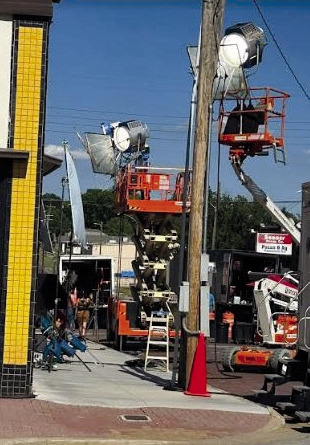
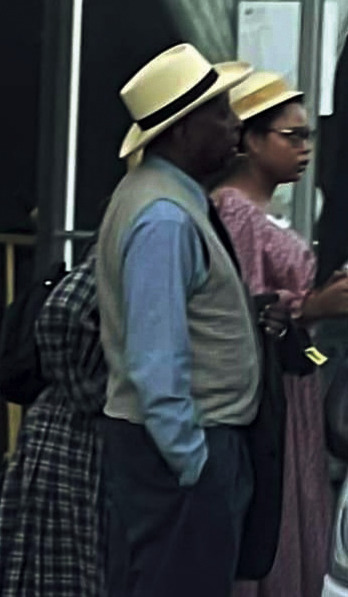
Bristowans, fascinated by an influx of large vehicles and a flurry of activity near the House building, recently took to social media and shared gossip amongst each other, wondering and speculating reasons behind the sudden burst of activity. The reason? The production company behind the upcoming film, “Sarah’s Oil”, used the House building to film scenes of the movie.
Although the film’s IMDb web pages bear little information about the film, they offer a brief description of the upcoming feature: “In 1914, an 11-year-old Black girl, Sarah Rector, struck oil on her Oklahoma land, igniting greed and corruption. Despite adversity, she prevailed through courage and faith, becoming the wealthiest Black girl in the world.”
Who was Sarah Rector? How did a young, black female come to own land in the early 1900s? Why are scenes being filmed in Bristow? Answers to the first two questions lie in our history of slavery and tribal relocation.
According to multiple publications, Sarah received her land as part of the allotments granted by the Treaty of 1866—the treaty made between the federal government and the Five Civilized Tribes. The treaty applied to Ms. Rector because her great-grandparents had been the slaves of Creeks—members of the Muscogee Creek Nation— prior to the Civil War, ensuring that her great-grandparents and their descendants were listed as “freedmen” on the Dawes Rolls.
Due to terms involving the integration of the tribes with Indian Territory, members of the tribe, freedmen, and the Rector family received land allotments. For her part, Sarah received more than 159 acres near Glenpool. Being a minor, she could not manage her own property under the law, so her father assumed the role; however, he believed the land to be worthless and attempted to relinquish or sell it to relieve the family of meeting the financial tax obligations of her allotment.
Due to the legal terms of the allotments, Sarah’s father learned he could not separate Sarah from her land, so he persisted in meeting the financial obligations of her property. However, upon learning he must continue to guard her land and pay appropriate taxes and fees, he searched for ways to help pay for those taxes, ultimately leasing her land to the Standard Oil Company.
After her land was leased, a driller struck oil, leading Sarah to receive large sums of money in the form of royalties. Those accruing royalties led Sarah to become known as “the richest colored girl in the world”—not unlike what happened to the Creek County Poor Farm located in Bristow when oil was struck on the property. Subsequently to that strike, the farm became widely known as “the richest poor farm in the world”.
While the poor farm was located in Bristow, cementing the city’s relationship with it in history, Sarah’s allotment does not share that same bond. However, Sarah’s story is being retold in the upcoming movie “Sarah’s Oil”, of which a portion has been filmed in Bristow.
In recent weeks, many Bristowans noticed unusual activity in and around the House building at the intersection of 8th Avenue and Main Street. That activity proved to be studio personnel and actors, filming “Sarah’s Oil” movie scenes.
Last weekend, large groups of locals and visitors gathered along portions of Main Street and along East 8th Avenue, observing the spectacle. Many shared their perspectives with nearby businesses, patrons, and other entities. Relatives of some actors involved in the film visited the library, local eateries, and historical society at the museum, sharing stories as well.
Despite reaching out to multiple individuals for additional information, regarding use of the House building, the film, and how Bristow became chosen as a filming site, no response was received prior to the time of print. Regardless, the filming engrossed the community throughout the week, resulting in numerous conversations and social media postings with gossip, tales, and expressions.